
Reviewed · TIMANFAYA VOLCANO TOURS
Timanfaya National Park Trekking with a Typical Canarian Snack
Volcanoes here talk, if you know how to listen. This Timanfaya trek nails two big things: a crater walk into El Cuervo and a Canarian aperitif with local wine during the hike. The only real drawback is simple: it’s still a 9 km walk, and the route can be adjusted for safety if weather turns.
What really makes it work is the human side. The group is kept small (max 10), and the guide energy is the kind you want when you’re standing on black lava wondering what you’re looking at—guides like Sandra and Eric come across as friendly, fun, and genuinely good at explaining the park in clear, practical ways (and the tour runs in English). You meet at Ermita de Santa María Magdalena in Tías, then you end right back where you started.
In This Review
- Route of El Cuervo: a 9 km volcanic walk you’ll actually understand
- Where the tour starts: Ermita de Santa María Magdalena in Tías
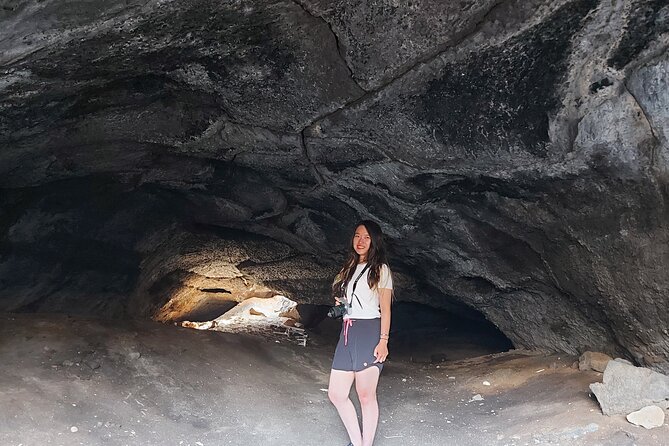
- Masdache volcanic tunnel: the park’s story starts underground
- Ortiz Volcano to Colorado Volcano: spotting ejected layers and red tones
- Black Volcano (Volcán Negro) and the malpaís lava fields
- The fallen palm and the Canarian aperitif with local wine
- Entering the El Cuervo crater: the highlight moment
- Sunset over Pico Partido: why timing this matters
- Price and value: is $75.86 worth it?
- What to bring for volcanic terrain and sun
- Who should book this Timanfaya trek (and who should rethink it)
- Should you book this Timanfaya hike with a Canarian snack?
- FAQ
- Where does the tour start?
- How long is the experience?
- What is the route distance?
- What language is the tour offered in?
- How many people are in the group?
- Is it suitable for most people?
- What should I bring?
- Does the itinerary change in bad weather?
- What’s included with the snack?
- Can I get a full refund if my plans change?
- Is there a mobile ticket?
Route of El Cuervo: a 9 km volcanic walk you’ll actually understand
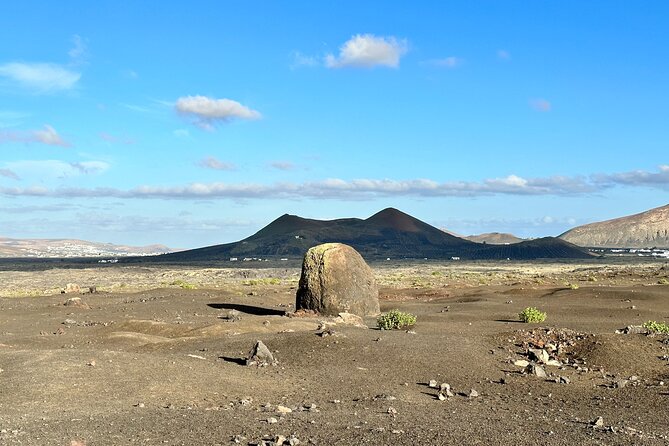
This hike follows the Route of El Cuervo through Lanzarote’s most recognizable volcanic scenes, and the best part is how the guide turns scenery into meaning. You’re not just walking across rock—you’re learning how those layers got thrown up, why the terrain looks the way it does, and how people live with the aftermath.
The trail is circular and totals about 9 km, with roughly 3 hours 30 minutes on the clock. That timing matters. It’s long enough to feel like you did something real, but short enough that you can stay focused—especially when the route hits the big visual moments like strombolian cones and crater walls.
More ways into the Timanfaya fire mountains
- Lanzarote: Timanfaya National Park Volcanic Craters Tour★ 4.3 · 2,097 reviews
- Arrecife: Timanfaya and Green Lagoon for Cruise Passengers★ 4.6 · 2,010 reviews
- Lanzarote: Timanfaya Park and Jameos del Agua Full-Day Tour★ 4.5 · 1,977 reviews
- Lanzarote: Timanfaya Park, Jameos Agua, & Cueva Verdes Tour★ 4.5 · 1,876 reviews
Where the tour starts: Ermita de Santa María Magdalena in Tías
You’ll start at Ermita de Santa María Magdalena (Carr. El Centro, 28) in Tías. It’s also where the experience ends, so you don’t have to think about getting yourself back across the island after your walk.
This kind of “start and finish together” setup is quietly valuable on Lanzarote. You can arrive, park your brain for a few hours, and just follow the group and the guide. If you’re the type who likes clear plans, this helps.
A heads-up from the practical side: because it’s a guided hike through volcanic terrain, you’ll get more out of it if you’re ready to walk consistently. There’s no magic transport mid-route in the info you get—this is a hiking experience.
Masdache volcanic tunnel: the park’s story starts underground
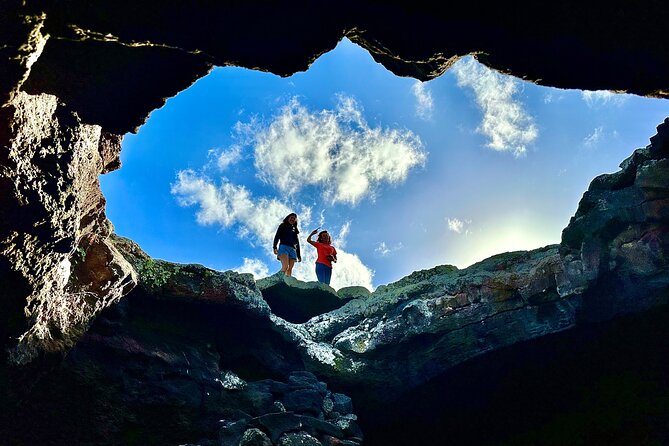
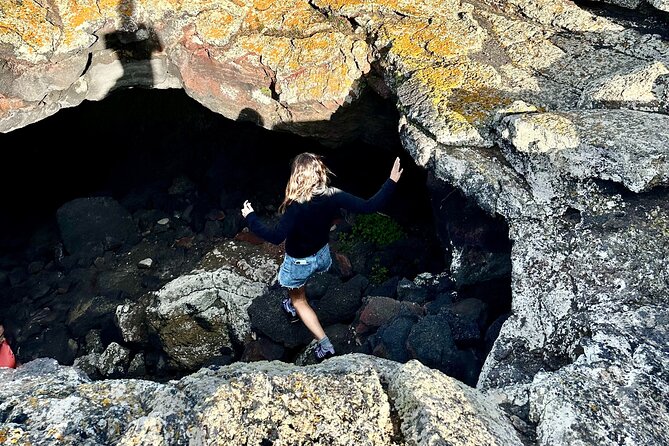
Before you begin the main trail segments, there’s a stop in Masdache for a volcanic tunnel. This is a clever warm-up because it teaches you how to “read” the island before you ever reach the more dramatic surface features.
A tunnel view does two useful things. First, it helps you understand that volcanic activity isn’t just loud events and glowing rock—it can also create voids and passages that shape how the landscape looks afterward. Second, it gives your brain a framework. When you later see layers, cones, and lava fields, you’ll know what to look for besides color.
If you tend to rush through viewpoints, this early stop is one of the moments worth slowing down for. A good guide can make a tunnel feel like a clue, not a detour.
Ortiz Volcano to Colorado Volcano: spotting ejected layers and red tones
The hike begins near the Ortiz Volcano. One of the most striking things here is the visibility of the volcanic material—those dramatic layers of material ejected during volcanic activity. Standing close enough to actually see the structure changes your understanding fast. Instead of thinking “volcanoes = random rock,” you start noticing patterns.
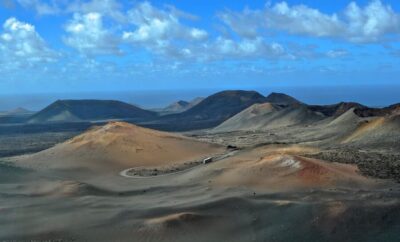
Then the route continues toward the Colorado Volcano, described as an impressive strombolian cone with striking red tones. Strombolian cones are about repeated explosive bursts, and that’s exactly the kind of detail a good guide turns into something you can picture. The red isn’t just decorative either—it’s part of what helps explain how different materials and conditions formed.
This is also where the guide quality matters most. The reviews highlight guides like Sandra and Eric for making the experience friendly and highly informative. That matters because cones and layers can look similar from a distance—clear explanations help you keep the “what am I seeing?” thread going instead of getting lost.
Black Volcano (Volcán Negro) and the malpaís lava fields
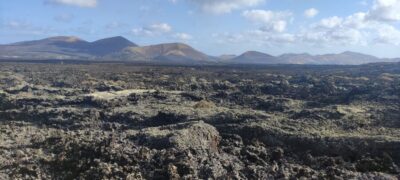
Next comes the Black Volcano (Volcán Negro), surrounded by rugged lava fields known as malpaís. This part can feel eerie in a good way. The rock is dark, the terrain is broken, and you start realizing that what looks empty at first glance is actually a whole system.
Here’s the practical value: the tour doesn’t stop at describing what’s there. It also points out how locals learned to adapt and make use of these seemingly barren lands. That’s the difference between a photo walk and a real guided visit.
When a guide explains how people adjust—how they work with the ground instead of fighting it—it makes the island’s volcanic character feel less like a disaster story and more like a lived reality. You’ll probably notice it most when the terrain seems harsh but the human presence is still there, just smarter and more local than tourists usually expect.
Lace up for more volcano hikes and trails
The fallen palm and the Canarian aperitif with local wine
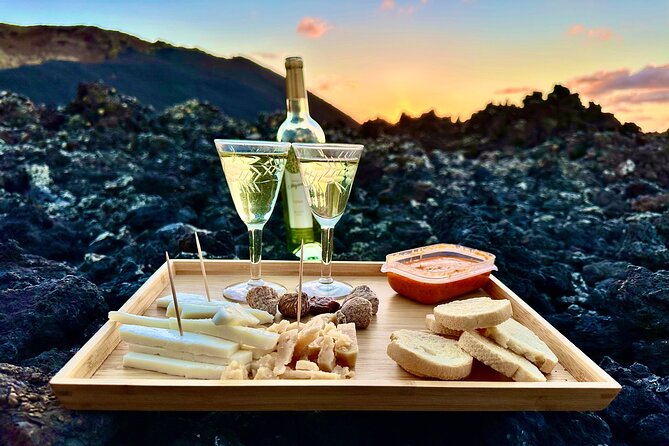
Midway through the walk, you’ll pause for a short break with a typical Canarian snack and local wine. The timing is smart. You need a reset point on a 9 km hike, and this gives you a chance to stretch without losing the flow of the route.
You’ll enjoy the aperitif while admiring a fallen palm tree—presented as a symbol of resilience in this harsh environment. That’s a small detail, but it hits. It’s the kind of scene that turns volcanic harshness into something more layered: nature changes, plants survive in their own ways, and humans respond with patience.
Two things to keep in mind:
- Don’t count on this being a full meal. It’s a snack/aperitif, so eat normally before you go.
- Bring your water for the hike itself. The included break is a bonus, not a substitute.
If you’re the type who loves food stops on walking tours, this is the best kind—local, brief, and tied to the setting instead of feeling pasted on.
Entering the El Cuervo crater: the highlight moment
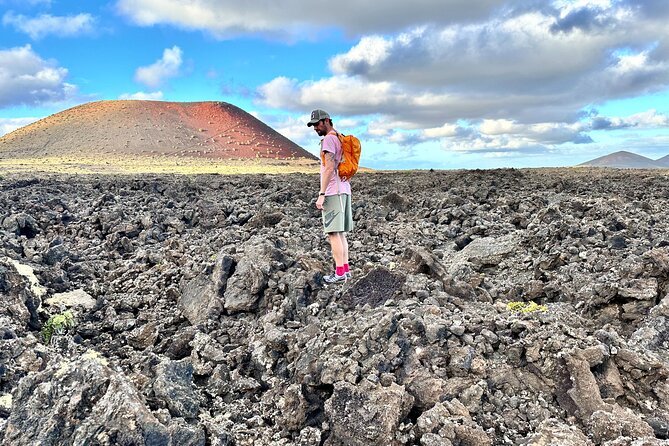
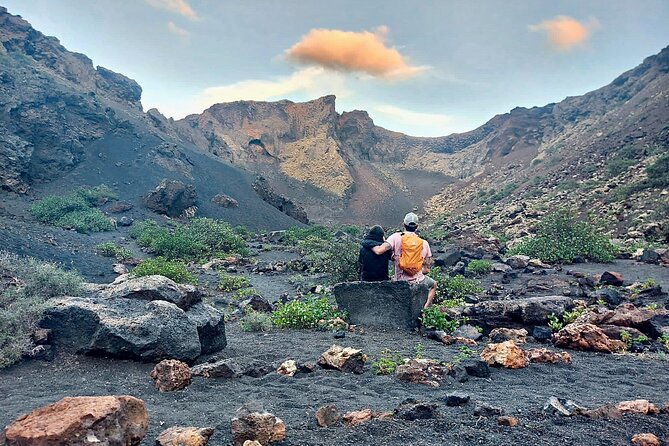
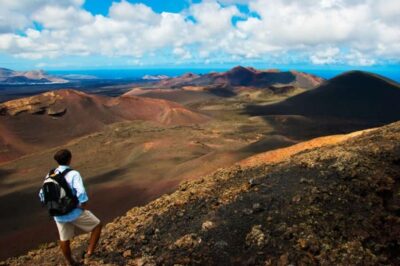
The standout part of the adventure is entering the majestic crater of El Cuervo Volcano. This isn’t just a viewpoint. You walk into the heart of Lanzarote’s volcanic past, and the change in perspective is immediate.
Crater walks do something great for your imagination. Up to that point, you’ve been learning the “where” and “how” of volcano formation from outside edges and layers. Once you’re inside, the rock geometry becomes real and personal. You can feel how the terrain funnels air, how the ground slope matters, and how the walls record volcanic history like a stacked archive.
This is also one of the best times to ask questions. If the guide is like Sandra or Eric—friendly, upbeat, and good at explaining—you’ll get answers you can actually use the rest of your trip, not just facts you forget later.
Sunset over Pico Partido: why timing this matters
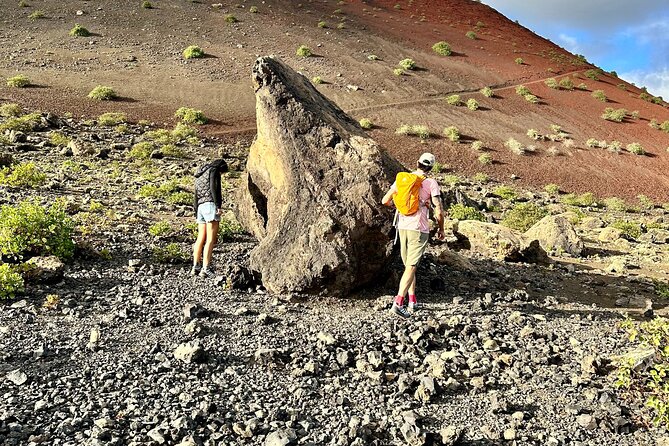
As the tour wraps up, you’ll see the sunset over Pico Partido. Even if you’ve seen sunsets on other islands, this one earns attention because you’re looking from volcanic terrain with strong color contrasts—golden light hitting dark rock.
Timing is everything here. Sunset is a natural “finish line,” so your energy is still in gear when you get those last photos and that last stretch of calm. It’s a nice way to end a geology-heavy walk: the science lessons keep ringing in your head, but the colors let your brain enjoy them.
If you’re a photographer, wear sunscreen even during late-day light. The sun can still be strong, especially when you’ve been walking on open volcanic surfaces with minimal shade.
Price and value: is $75.86 worth it?
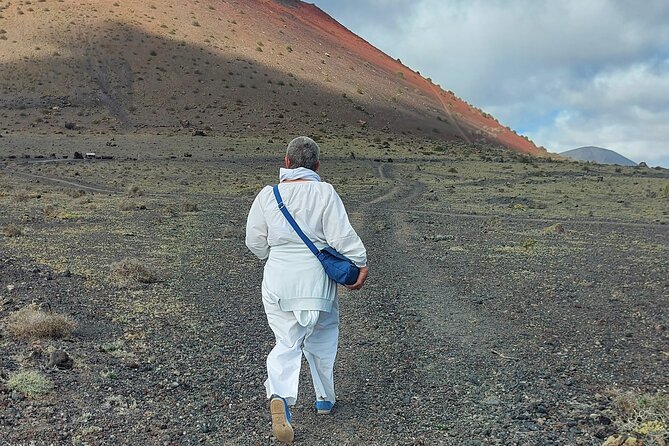
At $75.86 per person, this isn’t a bargain deal, but it also isn’t overpriced for what you get—especially if you care about understanding what you’re looking at.
Here’s what makes the price feel more reasonable:
- A guided hike through iconic volcanic terrain (about 9 km, around 3.5 hours)
- A structured experience that includes multiple named volcanic areas and a crater entry
- An included Canarian aperitif and local wine during the walk
- A small group size (max 10), which usually means more interaction and less waiting
- English-language guiding and a mobile ticket for easier arrival
If you tried to DIY this, you’d quickly run into the real challenge: knowing what matters. You can walk the terrain. Getting the context takes either a guide or serious homework. Paying for the guide is a shortcut to seeing the park in a smarter way.
What to bring for volcanic terrain and sun
The tour info is clear about essentials, and I agree with the basics. Wear comfortable walking shoes—this is not the place for flip-flops and optimism. Bring a hat and sunscreen because you’ll be in strong sun across exposed areas.
Also bring water. Volcanic hikes can feel deceptively dry even when you don’t notice it right away. Having your own bottle keeps you comfortable between stops.
If you’re prone to cold, consider a light layer for late-day wind, especially since you’re closing with sunset. Nothing heavy needed—just something to keep your mood steady in the final stretch.
Who should book this Timanfaya trek (and who should rethink it)
This tour fits well if you:
- Like guided explanations and want geology made understandable
- Enjoy walking tours but don’t want an all-day ordeal
- Want a local snack moment built into the experience (not a random detour)
- Appreciate a small group setting (max 10)
You might rethink it if you:
- Prefer very short walks or mostly flat routes (the hike is 9 km)
- Have limited mobility or tire quickly without frequent breaks
- Are sensitive to sun exposure and can’t manage hat/sunscreen/water
And if you’re simply chasing views, you’ll get them too. But you’ll enjoy it more if you’re willing to slow down and let the guide help you notice patterns in the rock.
Should you book this Timanfaya hike with a Canarian snack?
I’d book it if your goal is Timanfaya with context. The crater entry into El Cuervo, the tunnel stop in Masdache, and the way the guide connects volcanic features to human adaptation make this feel like more than a walking pass through dramatic scenery.
It’s also a strong choice for groups who want a guided experience in English with a small headcount. If you’ve ever done a busy tour where you spend half your time waiting, the max 10 setup is a real quality-of-life upgrade.
My one caution is about fitness expectations. This is a 9 km walk. If that sounds fine, you’ll likely come away with both photos and real understanding of Lanzarote’s volcanic story.
FAQ
Where does the tour start?
The tour starts at Ermita de Santa María Magdalena, Carr. El Centro, 28, 35572 Tías, Las Palmas, Spain.
How long is the experience?
It lasts about 3 hours 30 minutes.
What is the route distance?
The Route of El Cuervo is a 9 km circular trail.
What language is the tour offered in?
The tour is offered in English.
How many people are in the group?
The experience has a maximum of 10 travelers.
Is it suitable for most people?
The experience notes that most travelers can participate.
What should I bring?
Bring comfortable walking shoes, a hat, sunscreen, and water.
Does the itinerary change in bad weather?
Yes, the experience may be adapted depending on weather conditions for safety.
What’s included with the snack?
You get a Canarian aperitif paired with local wine.
Can I get a full refund if my plans change?
Yes. You can cancel up to 24 hours in advance for a full refund.
Is there a mobile ticket?
Yes, this is a mobile ticket experience.
More Volcano Trails to Walk
Timanfaya, a Few More Ways In
Not quite right? More Lanzarote tours and day trips we have been out on

Timanfaya Volcano Tours, compared.
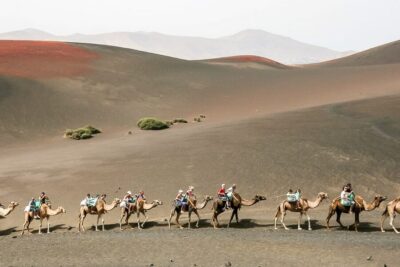 ★ 4.3Timanfaya National Park Volcanic Craters TourFrom $672,097 reviews
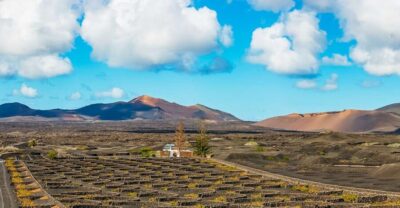 ★ 4.6Timanfaya and Green Lagoon for Cruise PassengersFrom $582,010 reviews
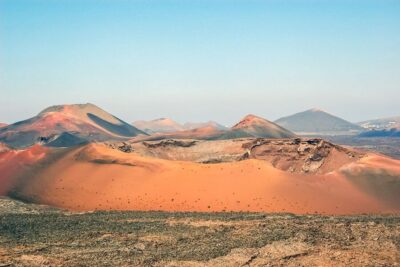 ★ 4.5Timanfaya Park and Jameos del Agua Full-Day TourFrom $881,977 reviews
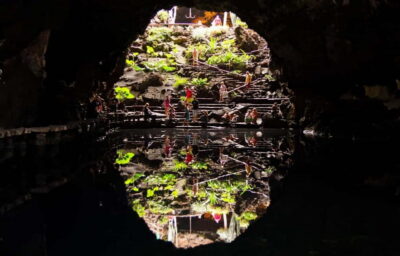 ★ 4.5Timanfaya Park, Jameos Agua, & Cueva Verdes TourFrom $1011,876 reviews
 ★ 5.0Tour to Timanfaya, Jameos del Agua, Cueva de los Verdes and viewpoint from the cliffFrom $1081,381 reviews
 ★ 4.5Timanfaya And El Golfo For Cruise Passengers (Mornings)From $66944 reviews
 ★ 4.4Arrecife/Playa Blanca: Timanfaya National Park Area Day TourFrom $77856 reviews
 ★ 4.8Timanfaya Natural Park Trekking TourFrom $55766 reviews
Browse the lists this tour appears in