
Reviewed · KAYAK & STAND-UP PADDLE
Sup Experiences in the ocean
SUP yoga on a board sounds wild, until you feel balanced. This Lanzarote session pairs yoga with stand-up paddleboarding in a lesson designed for real beginners, not just fitness pros. You start with coaching on stable positions, then build up to rowing and moving through the water—plus a guide who snaps souvenir photos as you go.
What I like most is the small-group size (only up to 8), which means you get hands-on attention and quick corrections. I also like that the instructors—Barbara and Diego from School3S Surf Sup y Soul—teach you step by step, including how to stand and how to get moving without stressing out.
One thing to consider: this is not for weak swimmers. The activity is specifically not recommended if you can’t swim, and you should also skip it if you feel sick (like a hint of fever or flu).
In This Review
- Key points worth knowing
- Where you start in Lanzarote (and why it matters)
- Price and value: what you’re really paying for at $95.31
- Your 90 minutes: the pacing behind the lesson
- The first big skill: yoga on the SUP table
- Floating platform yoga: how it feels different
- Rowing and standing: the coaching you actually need
- The sea walk: knees or feet, and why it’s fun
- Transfers from Puerto del Carmen: comfort without complexity
- Meet Barbara and Diego: why their teaching style fits beginners
- Photos as a souvenir: a practical extra
- Who this is for (and who might want to pick a different plan)
- Language, group size, and timing: how to get the best experience
- Should you book SUP yoga with School3S in Lanzarote?
- FAQ
- How long is the SUP and yoga experience?
- Is the class offered in English?
- What is the maximum group size?
- Do I need to know how to swim?
- Who will guide the lesson?
- Can I cancel and get a full refund?
Key points worth knowing
- Up to 8 people so you don’t get lost in a crowd
- Yoga on your board at first, then yoga on a floating platform
- You learn the “how” of rowing and standing, not just poses
- Ocean walk training on knees or on your feet once you’re more stable
- Souvenir photos are captured by your guide during the session
- Min age 18 and it’s offered in English
More kayak and paddleboard mornings
- Lanzarote: Kayak and Snorkelling at Papagayo Beach★ 4.8 · 315 reviews
- Kayak & Snorkelling in Papagayo★ 5.0 · 257 reviews
- Flamingo Beach: Guided SUP and Snorkeling experience★ 4.7 · 36 reviews
- SUP Standup Paddling and Snorkeling Shared Experience★ 5.0 · 34 reviews
Where you start in Lanzarote (and why it matters)
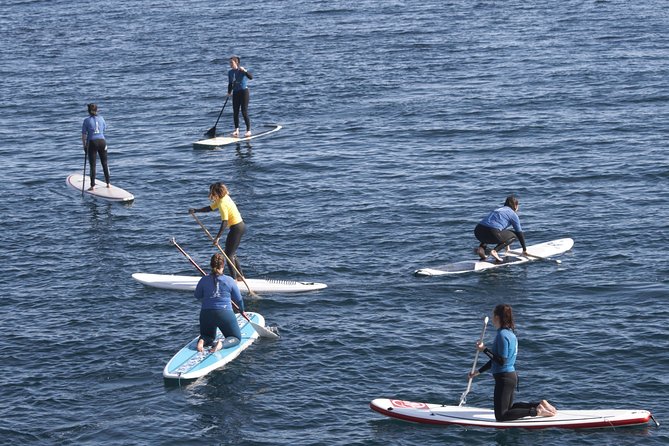
You meet at the activity hub in Tías, at Calle Roque del Este, 5, 35510 Tías, Las Palmas, Spain. From there, the day flows toward the beach where the lesson happens, using the provided SUP setup.
If you’re staying around Puerto del Carmen, you’ll appreciate the hotel transfer to start the experience smoothly. That matters more than it sounds, because the class timing is tight (about 1 hour 30 minutes), and you don’t want to waste part of your session figuring out transport.
Also, this is listed as near public transportation. So even if you’re not on the transfer list, you’re still not stuck.
Price and value: what you’re really paying for at $95.31
$95.31 per person is a fair chunk of change for a 90-minute experience—but the value is in what’s bundled.
Here’s what you’re buying:
- Small-group instruction (max 8): you’re more likely to get personal feedback on balance and posture.
- A structured skill path: yoga first on the equipment (then on water), then rowing/standing, then moving in the sea.
- A guide who captures souvenir photos: that’s a real perk if you want to remember how it looked when you were actually doing it.
If you’ve ever paid for a “tour” that’s really just a quick introduction, you’ll notice the difference here: the lesson is built around learning and practice. If you’re the type who likes clear coaching and wants to feel safe while learning something new, this price starts to feel more reasonable.
Your 90 minutes: the pacing behind the lesson
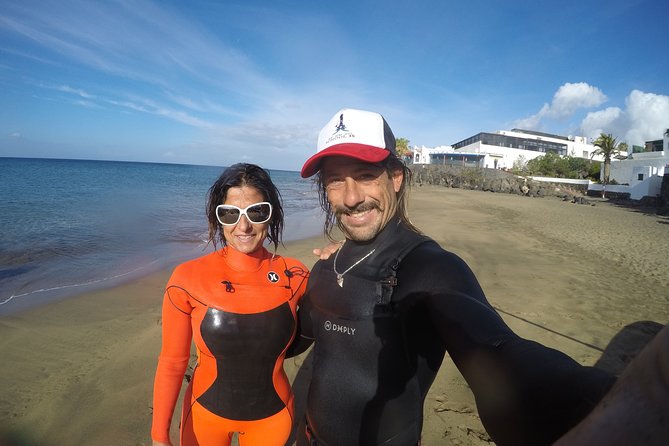
The SUP session is short enough that it feels energetic, not exhausting. The pacing is also intentional: you’ll learn stability and basic movement before you go further out.
You should expect a simple flow:
1) Meet at the school area and get introduced to the group
2) Change and head down with the gear to the water
3) Do the core practice (yoga on the board, then on a floating platform)
4) Learn rowing and how to stand
5) Finish with a sea walk on knees or feet
6) Enjoy the fun parts, including a little water contact
Because it’s only about 1 hour 30 minutes, you won’t get an overly long lecture. You’ll learn by doing—and by repeating until your balance catches up.
The first big skill: yoga on the SUP table
The first hour focuses on approach and yoga positions on the equipment. You’ll start on the board/table setup, which is a smart way to train balance without immediately worrying about drifting or deeper water.
This is where you get the mental shift: you realize you can keep your body calm while the “floor” moves. That’s a big deal for first-timers. Even if you’ve done yoga on land, you’ll likely feel the difference right away because water changes everything—your stability, your reactions, even your breathing.
If you’re worried about looking awkward, don’t be. The point here is to practice simple asanas while you build confidence.
More of the island worth your time



Floating platform yoga: how it feels different
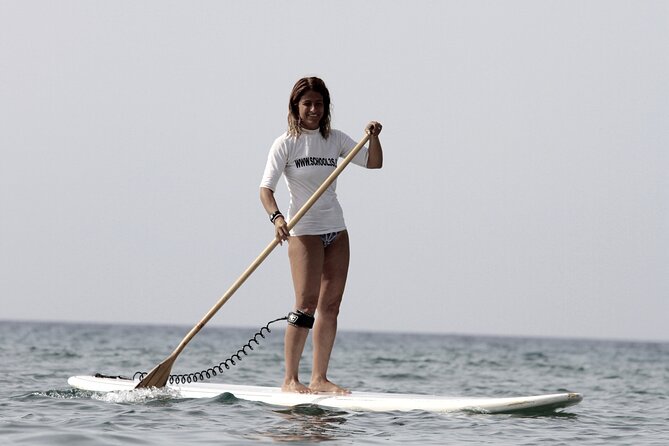
After you’re anchored on a floating platform, you switch from the initial stability setup to practicing on water. You’ll still be doing simple poses, but now you’re experiencing the board more directly—more motion, more balance demands.
The payoff is that you’re not just “on a board,” you’re learning how the board responds under you. That helps when you later row and stand, because you’ll already have a feel for how to center yourself.
This segment is also a nice change of pace. You get a break from the first stage, while still staying in the same skill zone: balance, posture, and control.
Rowing and standing: the coaching you actually need
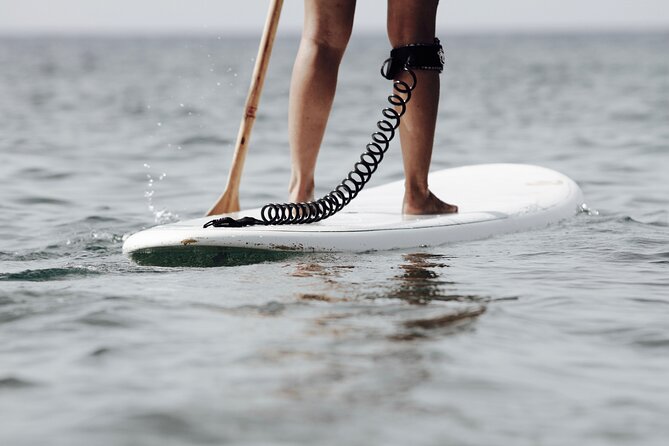
Once the yoga portion is complete, the instructor shifts into the practical SUP skills. This is where you’ll learn:
- How to row
- How to stand on the board
- How to coordinate movement without losing your balance
The key benefit is that you’re not left to guess. Stand-up paddleboarding can feel intimidating at first, mostly because your body has to manage wobble while you figure out what your arms are doing.
With this class, you’re taught those fundamentals right after your yoga practice, when you’ve already spent time building proprioception (your awareness of body position).
If you’ve been craving a beginner-friendly structure, this is the part you’ll probably enjoy the most once it clicks.
The sea walk: knees or feet, and why it’s fun
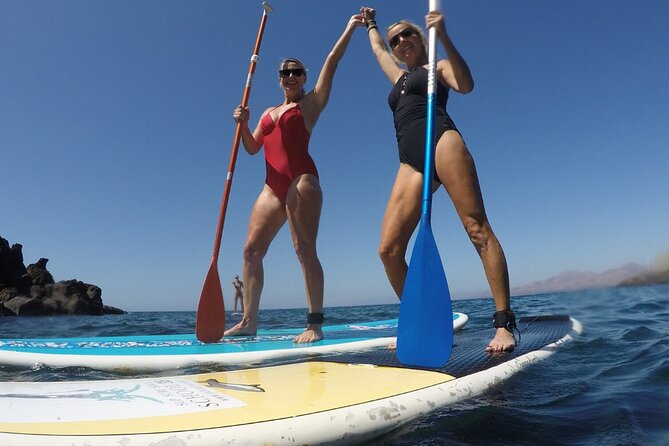
After learning to stand and row, you’ll take a walk in the sea. You may do it on your knees or on your feet, depending on comfort and the flow of the group.
This is where the lesson becomes an adventure. You’re not stuck doing the same pose repeatedly. Instead, you’re using the stability you practiced and turning it into movement across the water.
And yes—there’s also a playful element. The experience includes falling into the water as part of the game. That sounds scary on paper, but in practice it’s a useful way to learn that the ocean doesn’t need to be a threat. You’ll relax, laugh, and realize falling is not the end of the activity. It’s part of learning.
Transfers from Puerto del Carmen: comfort without complexity
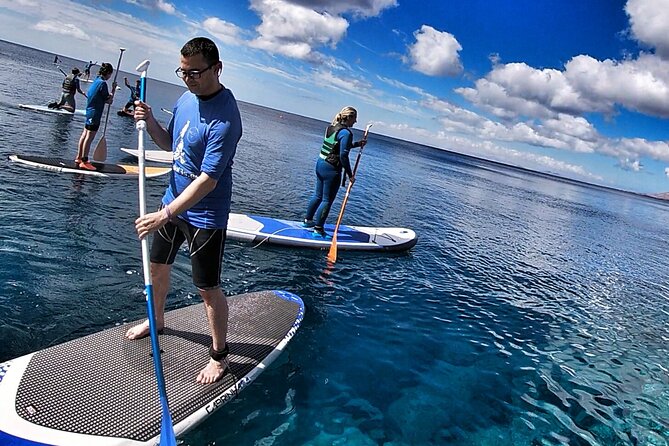
Starting with hotel transfers from Puerto del Carmen is one of those “small” perks that can make or break your day.
Why it matters:
- You avoid last-minute stress about how to get to the school meeting point.
- You arrive at the right time with less hassle, so you can focus on the lesson.
- You’re more likely to have the energy to enjoy the water practice instead of worrying about logistics.
If you’re not in Puerto del Carmen, you can still use the meeting point address in Tías and plan around nearby public transport.
Meet Barbara and Diego: why their teaching style fits beginners
The strongest feedback centers on the instructors’ approach—especially patience and clear guidance. Barbara and Diego are repeatedly described as professionals who make you comfortable and build confidence.
That coaching style is exactly what you want for yoga on water. Balance isn’t something you learn through hope. You learn it through correction:
- adjust your stance
- keep your body relaxed
- learn how to regain control fast
And they’re also described as adapting to different levels and circumstances. One person even mentioned that the class was flexible enough to fit their group, which is a good sign if you’re coming with friends or family and some people are newer to yoga or SUP than others.
If you want to feel safe while still having fun, this is a real advantage.
Photos as a souvenir: a practical extra
A guide captures souvenir photos during your day. That’s a small line in the details, but it’s a big deal for your memories.
On SUP, it’s tough to manage your phone safely while also doing the activity. Getting photos taken for you means you’ll have something to share and something to remember without turning the lesson into a camera project.
Just be sure to wear/handle your phone according to what the instructors recommend on the day—this is an ocean activity with gear and water involved.
Who this is for (and who might want to pick a different plan)
This experience is a good match if you:
- Want a beginner-friendly SUP plus yoga combo
- Like small groups and close coaching
- Enjoy moving from guided practice into play
- Want to try something more hands-on than a standard sightseeing day
It’s also described as fun enough for friends and even family settings (when the group fits the age and swimming requirements).
You should probably skip it if:
- You can’t swim (it’s specifically not recommended)
- You feel unwell, including a hint of fever or flu
- You’re under 18 (minimum age is 18)
And if you’re the kind of person who hates the idea of falling into water, know that falling is part of the game here. You can still enjoy it, but you’ll need the right mindset.
Language, group size, and timing: how to get the best experience
The lesson is offered in English, and the timing is about 1 hour 30 minutes. That means you’ll get enough time to learn core basics, but you won’t have time to linger on every single question.
Group size max 8 is the best antidote to that. With fewer people, you’re more likely to get direct attention when you wobble or when a pose feels awkward.
One practical tip: plan to arrive ready to move. Changing, gear, and getting to the water can eat up a few minutes even with transfers, so show up early enough to settle.
Should you book SUP yoga with School3S in Lanzarote?
I’d book this if you want a structured, beginner-friendly way to learn SUP while doing something relaxing and playful. The combination of yoga (to build balance) and then real water skills (row/stand/sea walk) is exactly the kind of lesson that helps you leave feeling capable, not overwhelmed.
It’s also a great choice if you appreciate coaching style. The repeated emphasis on patience and confidence-building from Barbara and Diego is the kind of detail that usually predicts a good experience.
Skip it if swimming isn’t something you can do comfortably, or if you’re feeling sick. And if you want a completely dry, calm activity with zero water contact, this isn’t that kind of session.
If you’re deciding between a simple SUP rental and an actual lesson: choose this. You’re paying for the learning curve, the small-group attention, and the souvenir photos to make it worth your time.
FAQ
How long is the SUP and yoga experience?
It lasts about 1 hour 30 minutes.
Is the class offered in English?
Yes, it’s offered in English.
What is the maximum group size?
The group is limited to a maximum of 8 travelers.
Do I need to know how to swim?
Yes. The activity is not recommended for travelers who are not able to swim.
Who will guide the lesson?
The experience is run by School3S Surf Sup y Soul, with instructors mentioned in the program experience including Barbara and Diego.
Can I cancel and get a full refund?
Yes. You can cancel up to 24 hours in advance for a full refund. If you cancel less than 24 hours before the start time, the amount you paid will not be refunded.
More Tour Reviews in Lanzarote



More Kayak & Paddle Sessions
Not quite right? More Lanzarote tours and day trips we have been out on

Kayak & Stand-Up Paddle, compared.
 ★ 4.8Kayak and Snorkelling at Papagayo BeachFrom $55315 reviews
 ★ 5.0Kayak & Snorkelling in PapagayoFrom $62257 reviews
 ★ 4.7Flamingo Beach: Guided SUP and Snorkeling experienceFrom $6936 reviews
 ★ 5.0SUP Standup Paddling and Snorkeling Shared ExperienceFrom $5834 reviews
 ★ 5.0Kayak Excursion to PapagayoFrom $8433 reviews
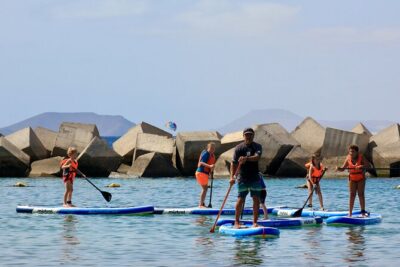 ★ 5.0Stand Up Paddle Boarding Lesson in Playa FlamingoFrom $6625 reviews
 ★ 5.0Kayak Experience in Playa BlancaFrom $6512 reviews
 ★ 5.0Stand up paddle class for beginnersFrom $6512 reviews
Browse the lists this tour appears in