
Reviewed · CéSAR MANRIQUE ART & LANDMARKS
North Lanzarote: The Work of César Manrique
Volcanic art, plants, and underground wonder in one day. I love how the César Manrique Foundation in Tahiche turns lava rock into living design, so you feel the island’s creative spirit right away. You’ll also roll through Lanzarote’s north with stops that mix history, geology, and growing things—basically Manrique’s favorite recipe.
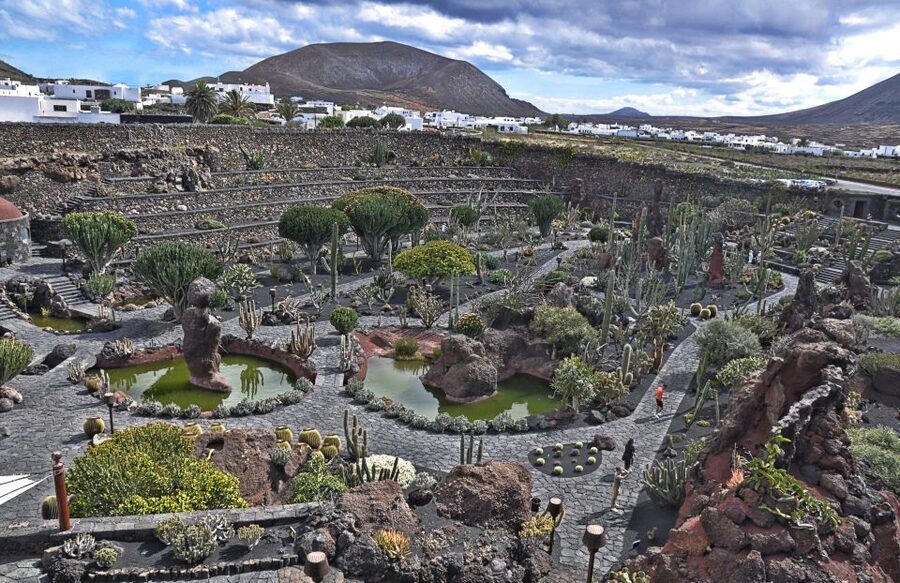
I also love the Cactus Garden, where you wander among more than 1200 cactus species and start seeing how this harsh landscape can still be playful. The one catch is timing: a few key visits can feel a bit rushed, especially if you like to linger (notably the cactus garden and the aloe museum).
In This Review
- Key highlights you’ll actually care about
- Manrique’s North Lanzarote route: art that behaves like nature
- Teguise’s paved plazas: where Lanzarote feels old and lived-in
- The viewpoint on the way to Haría: El Valle de las Mil Palmeras
- Cueva de los Verdes: walking through volcanic time
- Cactus Garden: 1200 species, and why this feels more than decorative
- Aloe Museum and the cochineal lesson at Guatiza
- The old quarry and the Manrique Foundation in Tahiche
- Food, guides, and pacing: where the experience can vary
- Price and value: is $101 worth your time?
- Who this tour fits best
- Should you book North Lanzarote: The Work of César Manrique?
- FAQ
- How long is the North Lanzarote tour?
- What’s included in the price?
- Do I get picked up from my hotel?
- Is the tour wheelchair accessible?
- What should I bring?
- What languages is the live guide available in?
Key highlights you’ll actually care about
- Tahiche’s volcanic bubbles at the Manrique Foundation: art built into the island’s stone.
- Cueva de los Verdes ticketed access: a cave shaped by volcanic action you can walk through.
- Cactus Garden with 1200+ species: more than a quick photo stop.
- Teguise old-capital stroll: old streets and plazas with a real sense of place.
- Aloe Museum + aloe learning: simple, practical plant education.
- Guatiza prickly pears and cochineal dye: see how plants become color.
Further into Cesar Manrique's Lanzarote
- Lanzarote: LagOmar Museum Entry Ticket★ 4.7 · 1,113 reviews
- Lanzarote: César Manrique Full-Day Tour★ 4.6 · 387 reviews
- Lanzarote: César Manrique Foundation and Teguise Market★ 4.6 · 238 reviews
- Lanzarote: Legacy of César Manrique Guided Tour★ 4.5 · 188 reviews
Manrique’s North Lanzarote route: art that behaves like nature
This tour is built around one big idea: César Manrique didn’t treat art like something you put on a wall and forget. He treated it like part of the land—shaped by wind, stone, light, and water. You’ll feel that theme again and again: volcanic interiors, cactus ecosystems, and a foundation set in the old home of a Lanzarote-born artist.
At 8 hours, you’re not doing Lanzarote “slow travel.” You’re doing smart travel: a day that hits the most Manrique-linked north highlights without you needing to plot roads, ticket times, or long drives on your own. For me, the value is the variety packed into one coherent storyline. You’re not jumping randomly—you’re moving through geology, botany, and art in a way that helps it all click.
And yes, you get an official guide and a proper air-conditioned bus, which matters on Lanzarote when the sun is doing its thing.
Teguise’s paved plazas: where Lanzarote feels old and lived-in
Teguise is the old municipal capital, and the tour brings you straight into that vibe: paved streets, historical plazas, and the kind of town layout that makes it easy to pause without feeling like you’re searching. Even if you only have a short window, you can still get your bearings fast—grab a moment in the shade, watch how locals move, and notice that the streets weren’t designed for cars first.
One practical note: group guiding sometimes needs to cover multiple languages during a stop. If you’re sensitive to that (or if you’re hoping for extra time in town to wander), keep expectations realistic. The schedule stays full, and Teguise is one of the places where the pace can feel tight if the group needs extra interpretation across languages.
Still, I think Teguise is worth it because it’s the “human” contrast to the cave and volcanic structures. It reminds you that this island story isn’t just rocks and plants—it’s also people building their lives around them.
The viewpoint on the way to Haría: El Valle de las Mil Palmeras
On the drive toward Los Valles and Haría, you get a big view stop over El Valle de las Mil Palmeras—the valley of the thousand palm trees. Even with no detailed explanation, you’ll notice what makes this moment different: green is rare enough on Lanzarote that when it appears in a concentrated valley, it reads instantly. You go from sun-baked stone country to an area that looks almost agricultural, like a pocket of survival.
This is one of those stops that doesn’t need to be long to land. Use it to reset your eyes before the cave and garden time. It also helps you understand why certain plantations and plant-focused stops later make sense. Lanzarote isn’t just “dry.” It’s about where water and cultivation manage to find a foothold.
Cueva de los Verdes: walking through volcanic time
Cueva de los Verdes is one of Lanzarote’s standout cave systems, and the tour treats it like a main event, not an optional detour. You’ll travel to the center of the Earth through the cave experience, with volcanic eruptions responsible for the interior formations.
What makes this stop special is the contrast: you’re in open-air sunlight, then you step into a world where the rock has texture, curves, and shapes you don’t get outside. It’s the kind of place where you naturally slow down because you want to look carefully at what the cave walls are doing.
You’ll also appreciate the practical part: you get a ticket to Cueva de los Verdes, and the tour includes skip-the-ticket-line, which saves time. On a packed 8-hour day, that matters.
If you get even a little claustrophobic, you’ll want to be aware that caves change your sense of space. The good news: this tour includes the “you’re here, you walk, you move on” structure. No extra wandering required—you get a defined experience.
More of the island worth your time




Cactus Garden: 1200 species, and why this feels more than decorative
If you’ve only ever seen cactus as a quirky houseplant, the Cactus Garden will correct that idea fast. More than 1200 species are planted and organized in a way that makes you start thinking like a botanist, even if you’ve never had one. You don’t just see cacti—you see how they’ve adapted to survive.
The vibe here is quietly satisfying. You can spend time comparing shapes: spines, pads, forms that look like weapons until you realize they’re protection. And because you’re on Lanzarote, it also makes the island’s harshness feel less like a curse and more like a design constraint.
One timing consideration: the tour runs tight. In particular, some people felt the time at the cactus garden could be longer. So if you tend to linger—taking photos slowly, reading labels, and walking at a slow pace—plan to keep an eye on your minutes. Wearing comfortable shoes is not optional here.
Aloe Museum and the cochineal lesson at Guatiza
After you pass through Arrieta and Mala, you stop at an aloe-focused stop where you can learn about the benefits of aloe vera. The Aloe Museum is built for curiosity: you learn why aloe gets used the way it does, and you connect that knowledge to the plant itself rather than treating it like a generic product on a shelf.
Then the tour heads toward Guatiza for a look at prickly pear plantations. Here’s where the island’s practicality shows up in a surprising way: the natural dye cochineal is produced from these plants. You’ll see how a living plant can become color, and that gives the day a useful “how things work” feeling.
These stops are great if you like nature that has a purpose. They’re not just sightseeing; they’re plant-based knowledge in two different forms: aloe for human use, cochineal linked to color production. If you’re the kind of person who likes leaving with at least one concrete takeaway, you’ll probably get a couple here.
The old quarry and the Manrique Foundation in Tahiche
This is the emotional center of the day. First you’ll visit an old quarry where César Manrique is known for fusing nature and art in a way that feels physical, not theatrical. The quarry stop helps you see the underlying philosophy before you enter the best-known location.
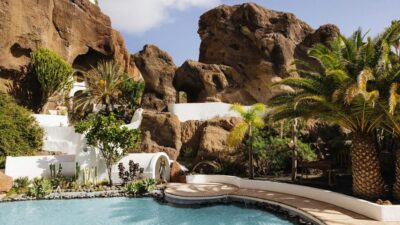
Then comes the César Manrique Foundation, in Tahiche, in the artist’s old house. This is where the volcanic world and human creativity meet in a big, visible way. You’ll be able to contemplate Manrique’s work, plus paintings and sculptures by other avant-garde artists. In the Tahiche setting, the lava rock and water-like shapes create a feeling that the building is acting as part of the landscape, not overriding it.
And yes—the volcanic bubble formations are a huge part of why people remember this stop. Even if you’re not a hardcore art fan, these structures are visual proof that “island art” can be built without pretending the island is just a backdrop.
Food, guides, and pacing: where the experience can vary
The tour includes lunch, and it’s part of how they keep the day flowing. Still, food quality can vary by taste. One passenger found the lunch not very tasty and suggested something like paella or a more traditional option. If you’re picky about meals, consider treating lunch as a covered necessity rather than the highlight of your day.
The guide experience is also the human factor. Most people rate the guiding highly, with comments like excellent and very good. One name that showed up is Juan Carlos, and one French-speaking guest said his accent was strong and his French comfort level wasn’t always smooth, which made parts of the explanation harder to follow. If you’re booking in a language you don’t speak perfectly, it can help to be mentally flexible and focus on visual learning at each stop.
Pacing is the other reality check. Your day is full, so some visits can feel short—especially those that people naturally want to roam through longer, like the cactus garden and the aloe museum. If you want a slower tempo, you might prefer doing one or two of these sites on a separate day.
Finally, pickup can be a little less exact than you’d expect. You might not be picked up exactly at your hotel door, and pickup time depends on where you’re staying. The simple fix is to confirm the exact pickup point and time before you set off for the day.
Price and value: is $101 worth your time?
At $101 per person for an 8-hour north Lanzarote loop, you’re paying for several things at once: an air-conditioned bus, an official guide, multiple paid admissions (Cueva de los Verdes, Cactus Garden, Manrique Foundation), an aloe museum visit, lunch, and travel insurance for the trip duration. You’re also getting skip-the-ticket-line help, which reduces dead time.
In plain terms: this is good value if you want a structured day that strings together the island’s big north highlights without you doing logistics. If you were to drive yourself, you’d spend time ticketing, coordinating, and waiting—plus you’d be guessing at which order makes sense.
It’s less of a bargain if you’re the type who hates fixed schedules and wants long, slow time in every stop. Because the day is packed, you may feel a pinch in places where you want to linger.
Who this tour fits best
I’d point you toward this tour if you want a single day that connects Manrique’s art to Lanzarote’s geology and plant life. It’s ideal if you like nature but also care about design and how humans shape the land responsibly.
You’ll also like it if you don’t want to be driving between far-flung north points. The bus makes the route easier, and having the tickets handled cuts friction.
If you rely on wheelchair access, note that buses are not adapted for wheelchair users. And if you’re traveling with pets, this tour doesn’t allow them.
Should you book North Lanzarote: The Work of César Manrique?
I’d book it if you want a high-impact, well-structured day in north Lanzarote—especially if Tahiche, cactus, and volcanic caves are on your must-see list. The combination of Cueva de los Verdes, the cactus experience with 1200+ species, and the Tahiche Manrique Foundation is exactly the kind of trip where one good plan beats three separate, half-done ideas.
I’d hesitate only if you’re someone who needs lots of time inside each stop or you know you’ll struggle with quick pacing. In that case, you might get more satisfaction picking fewer sites and giving yourself breathing room.
If you want art, plants, and volcanic “wow” in one day, this is a strong bet. Just show up with comfortable shoes and a mindset that the best photos come when you accept the schedule and enjoy what you’re seeing right then.
FAQ
How long is the North Lanzarote tour?
The duration is 8 hours.
What’s included in the price?
The tour includes an air-conditioned bus, an official guide, tickets to Cueva de los Verdes, the Cactus Garden, and the César Manrique Foundation, a visit to the Aloe Museum, lunch, travel insurance for the trip duration, and skip-the-ticket-line.
Do I get picked up from my hotel?
Pickup is included, but you might not be picked up exactly at your hotel. The supplier reconfirms the exact pickup point and time after booking, and pickup time varies by your location.
Is the tour wheelchair accessible?
The buses are not adapted to wheelchair users.
What should I bring?
You should bring comfortable shoes.
What languages is the live guide available in?
The live tour guide is available in English, German, and French.
More Tour Reviews in Lanzarote




More of Manrique's Lanzarote
Not quite right? More Lanzarote tours and day trips we have been out on




César Manrique Art & Landmarks, compared.
 ★ 4.7LagOmar Museum Entry TicketFrom $111,113 reviews
 ★ 4.6César Manrique Full-Day TourFrom $100387 reviews
 ★ 4.6César Manrique Foundation and Teguise MarketFrom $44238 reviews
 ★ 4.5Legacy of César Manrique Guided TourFrom $98188 reviews
 ★ 4.5Tour of the César Manrique Foundation and Teguise MarketFrom $4463 reviews
 ★ 4.5Lanzarote Cesar Manrique with Jameos del Agua EntranceFrom $10061 reviews
 ★ 5.0Jameos Agua, Mirador Rio, Foundation – César Manrique LanzaroteFrom $10256 reviews
 ★ 4.3Teguise: Market and César Manrique Foundation TourFrom $3839 reviews
Browse the lists this tour appears in