
Reviewed · SCUBA DIVING & MUSEO ATLáNTICO
Museo Atlantico for non-certified divers
First underwater experiences can feel scary. This one turns that nervous energy into something manageable, with pool skills practice and close instructor attention before you go out to the Museo Atlántico. I especially like the small-group cap of seven and the way the team coaches comfort step by step, with names like Martha and Marco popping up for patience and steady support. One thing to think about: if you struggle with ear equalization or health screening, you may not complete the full underwater part.
What also works well is the flow of the morning—gear and safety talk, then controlled practice, then a boat trip over to the sculptures. People mention instructors staying calm when nerves hit, and that matters here because the plan is to reach beginner-friendly depths, often around the 12–14 meter range when everything clicks. A possible drawback is that the museum time is tightly scheduled, so if you want slow, lingering viewing, you may feel rushed compared with a longer, custom experience.
In This Review
- Key takeaways before you go
- First-timer setup in Playa Blanca: what the morning really feels like
- Pool skills practice: how they build confidence without rushing you
- The boat transfer to the Museo Atlántico: the “rare attraction” moment
- Underwater museum time: what “guided” really means
- Instructor attention (and real names) is the difference-maker
- Depth, equalization, and the reality check that keeps people safe
- What you’ll see: sculptures, fish, and a different kind of “museum”
- Time on the water: short and focused, not a half-day adventure
- Photos and comfort details that matter more than you think
- Price and value: is $192.29 a good deal?
- Who should book this, and who should think twice
- Should you book Museo Atlántico for non-certified scuba students?
- FAQ
- Do I need a diving license for Museo Atlántico?
- How long is the experience?
- What time does it start in Playa Blanca?
- Is pickup included?
- How big is the group?
- What language is the experience offered in?
- What if I can’t equalize my ears or I feel unwell?
- What is the minimum age?
- How long should I wait before flying after the program?
- Is the tour dependent on weather?
Key takeaways before you go
- Small group size (max 7): more attention, less waiting around, and easier communication underwater
- Pool training first: you practice basic skills in a controlled setting before the ocean
- Museo Atlántico by guided supervision: you visit Europe’s underwater sculpture museum with structured support
- Beginner-friendly setup: no license needed, and instructors manage ascent and descent rates
- Ear equalization matters: plan for coaching, and be ready for the possibility of stopping if it’s not working
- Playa Blanca transfers included: you don’t have to solve logistics on vacation
More dives, the Museo Atlantico included
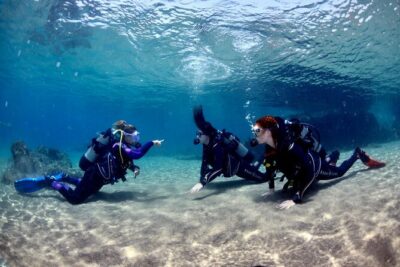
- Lanzarote Introductory Scuba Diving Experience★ 5.0 · 766 reviews
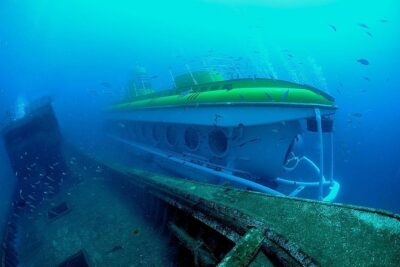
- Submarine Safaris Lanzarote★ 4.5 · 469 reviews
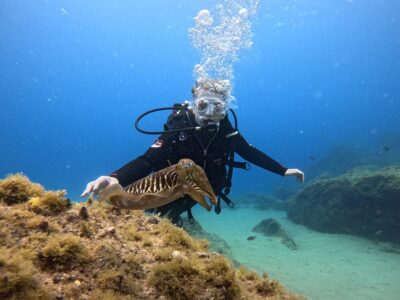
- Lanzarote: Intro to Diving Experience for Beginners★ 5.0 · 244 reviews
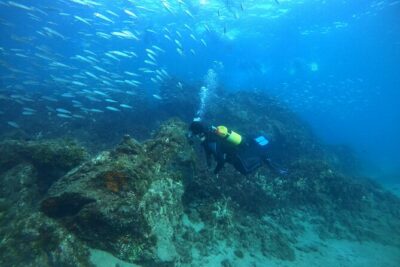
- Try Scuba Diving with 2 Ocean Dives★ 5.0 · 242 reviews
First-timer setup in Playa Blanca: what the morning really feels like
The experience starts at 10:00 am at the scuba center in Centro Comercial La Mulata in Playa Blanca. If you’re getting pickup, the exact time depends on where you’re staying, and the operator contacts you after booking. Either way, you’re not left to guess what happens next—there’s a warm welcome, then a safety briefing and a plain-language run-through of the basics.
Before anything touches the water, you’ll fill out a health questionnaire. That’s not just paperwork theatre; it’s how they check fitness to dive/try scuba. Some medical conditions (the usual examples are asthma and heart problems) can prevent you from going in, so if you’re unsure, it’s worth asking your doctor ahead of time.
The minimum age is 10 years, and the activity is best for people with moderate physical fitness. If you’re the type who gets winded easily or struggles with motion sensitivity, you might want to be cautious and tell the team early.
Pool skills practice: how they build confidence without rushing you
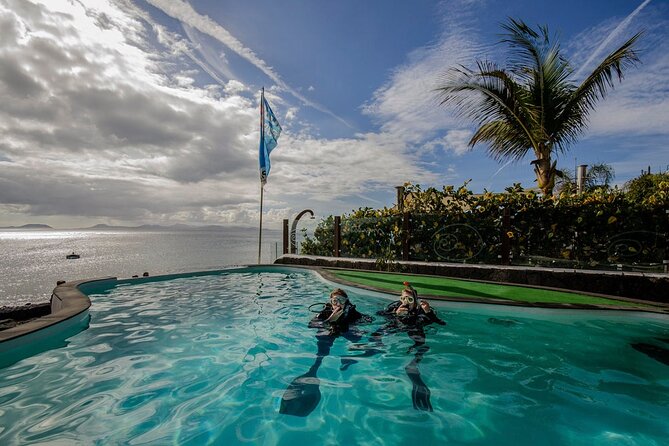
After the initial briefing, you move into the pool training session. This is where the experience earns its credibility for non-certified participants. Instead of throwing you straight into open water, you get hands-on practice with the core tasks you need to feel in control.
In plain terms, the pool is for:
- learning how to handle equipment and breathing support in a calm setting
- practicing key signals and procedures so you can communicate underwater
- getting comfortable with basic control while staying supervised
This part matters because it often decides whether the ocean portion feels empowering or panic-inducing. One review highlights how instructors stayed patient and explained things in a way that made nervous first-timers feel ready—exactly what you want from an intro program.
The boat transfer to the Museo Atlántico: the “rare attraction” moment
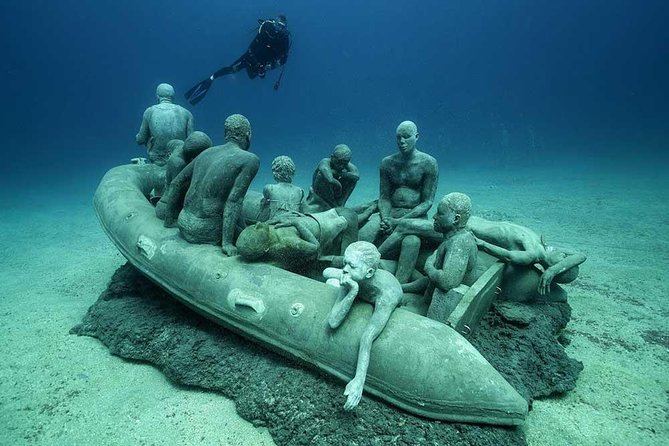
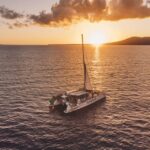
Around 12:00, you head out by boat toward Museo Atlántico, the underwater sculpture museum that’s noted as the only one of its kind in Europe. It’s one of those attractions that sounds like a marketing line—until you’re actually on the water and realize you’re going to see art living in the sea.
On the ride, it helps to bring the mindset that this isn’t a solo adventure. The day is structured: supervision, timing, and group control are part of how they keep everything safe and beginner-friendly. Reviews mention the team being attentive on board and keeping the vibe relaxed, especially for people who felt anxious.
If you get motion sickness, this is one spot to plan. Nothing in the details guarantees sea conditions, and the overall experience requires good weather, so you’ll likely be on a schedule that matches the ocean’s mood.
Underwater museum time: what “guided” really means
Once you’re at the site, you go with direct instructor supervision. Your instructors guide the experience, including how you move through the sculptures and how they manage your ascent and descent rates. That matters because it’s not just about seeing the art—it’s about staying within beginner-safe limits.
The experience is described as reaching a maximum depth suitable for beginners. In practice, some first-timers report going to roughly 12–14 meters when comfort and equalization are working. That’s a meaningful depth for someone new, so think of this as a real underwater experience, not a superficial “touch and go” activity.
Here’s what you should take away:
- You’ll have a guided route among the sculptures
- You’ll be using signals for communication, including checks related to comfort and equalization
- You shouldn’t expect unlimited time at each statue
A small downside shows up in one critical review: the underwater viewing felt rushed compared with what the person expected. Even if you don’t share that expectation, it helps to mentally prep that the museum is visited at a controlled pace. Your instructors are balancing safety, depth, and group timing.
More of the island worth your time




Instructor attention (and real names) is the difference-maker
A big reason this tour gets such strong feedback is how the instructors handle nerves. People mention being calmed down, given confidence, and helped step by step—especially for first-timers who thought they couldn’t manage more than a meter or two.
Specific names show up in the feedback:
- Martha is mentioned for extra patience and support for someone doing their first time
- Maliny is mentioned for being patient and supportive
- Marco is mentioned for top-level guidance
- Steve is mentioned for photography support
Now, I wouldn’t treat names as a guarantee you’ll get the same person. But the pattern is clear: the team’s coaching approach is central to the value.
Also, group supervision is strong. Even when the day includes different comfort levels, instructors stay close. That helps when you’re learning how to equalize ears, handle breathing, or simply stop yourself from overthinking.
Depth, equalization, and the reality check that keeps people safe
Ear equalization is a key part of being comfortable underwater. The program includes reminders that you may need to equalize as you go. If it’s not working, the sensible option is to adjust—either stop the attempt or change what you do next.
One critical thread in the feedback stresses that:
- the health questionnaire exists for safety reasons
- instructions about signals and procedures should be clearly communicated
- some people may not complete the full underwater portion if they can’t equalize, feel stressed, or aren’t comfortable
So here’s your practical takeaway: be honest during the briefing. If you have ear problems, recurring sinus issues, or you know equalization is a challenge for you, bring that up early. Don’t wait until you’re underwater. Equalization can’t be forced like a switch—if it’s not happening, the plan has to adapt.
Finally, keep in mind the schedule is tight for beginners. If you find yourself needing extra reassurance, say it early and often. It’s always easier for the team to help when they know immediately that you need a pause.
What you’ll see: sculptures, fish, and a different kind of “museum”
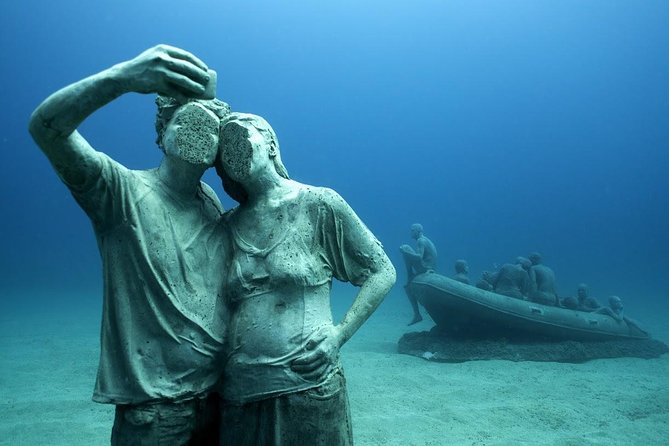
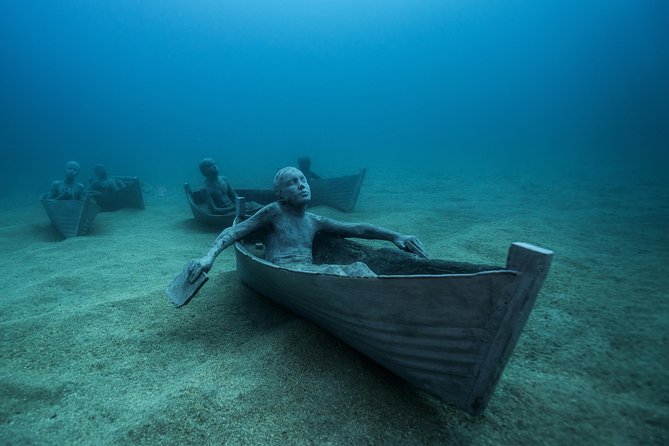
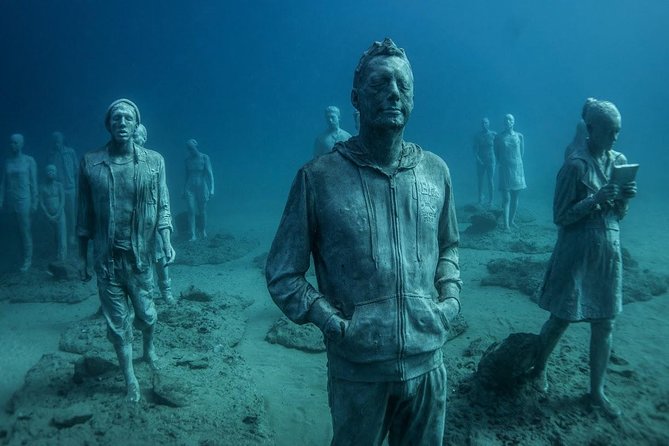
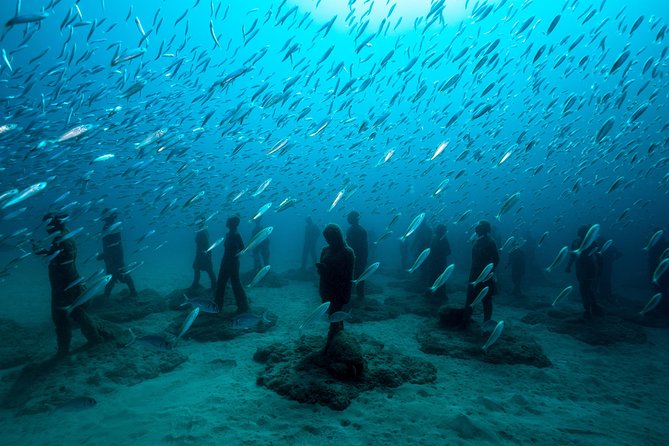
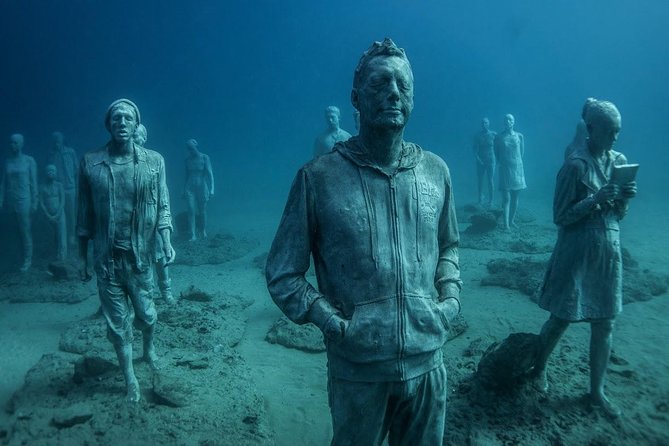
Museo Atlántico is known for underwater sculptures, and the value here is that you see them in their real habitat. You’re not walking around a gallery—you’re moving past works placed for people to experience them as part of the sea environment.
In the feedback, the common themes are:
- the sculptures feel meaningful and memorable
- visibility can be good enough to enjoy the shapes
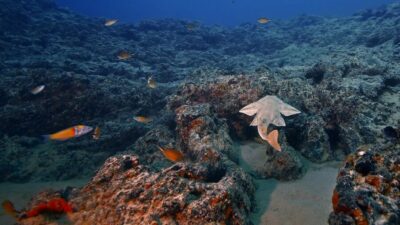
- you can see fish as part of the experience
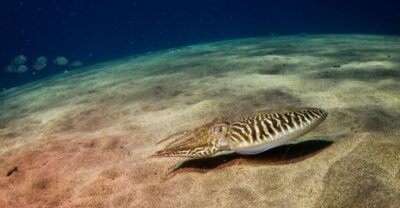
One review even calls out an octopus sighting, which is the kind of bonus you can’t plan for but hope for. The practical move is to stay calm underwater. The more relaxed you are with your breathing and buoyancy control, the more you can actually look around instead of focusing on staying steady.
Time on the water: short and focused, not a half-day adventure
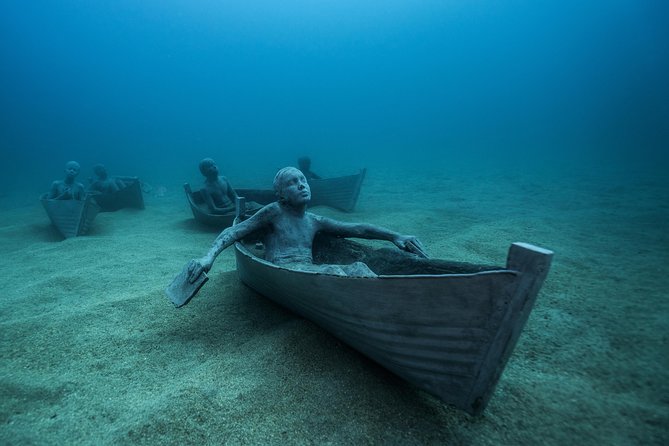
The whole experience is about 3 hours. The day is paced for first-timers: brief training, then guided museum exploration, then back to the meeting point. That makes it a good fit if you want a signature Lanzarote activity without losing your entire afternoon.
It also explains why the underwater viewing can feel quick. When time is limited, you’ll likely see the museum route rather than linger at each piece. If you’re the type who likes slow travel—sit, look, re-look—this might feel like a sprint. If you’re the type who prefers guided structure and safety, this format is a plus.
Photos and comfort details that matter more than you think
Some people mention the team taking photos (for example Steve is credited for photographs). There’s also criticism about photo viewing speed. I can’t promise how smooth photo handling will be on your exact day, so I suggest you treat photos as a possible extra, not a core promise.
What I would do before you go:
- wear something that dries fast and can get splashed
- consider footwear that works around wet surfaces (one review suggests having a way to walk comfortably to the water)
- eat beforehand and sleep well
One review explicitly warns that it can be a challenging experience, and comfort starts before you reach the boat. That’s not scary—just smart. If your body is fueled and rested, the briefing and pool practice land better.
Price and value: is $192.29 a good deal?
At about $192.29 per person for roughly 3 hours, this sits in the “pay for safety and support” category. The value isn’t just the museum. It’s the whole package:
- no license required for beginners
- pool training before the ocean
- small-group size capped at seven
- Playa Blanca transfers included
- guided supervision during the underwater portion
- instruction in English
If you tried to piece this together on your own—finding instruction, transport, and a first-timer-friendly plan—you’d spend time and likely pay more. The tight cap and beginner coaching are what justify the cost.
Still, balance that with the critical point: if you expect a slow, long museum visit or you want a full diving instruction course, this may feel too short. This is an intro experience with a structured mission: get you safe, get you to the sculptures, get you back.
Who should book this, and who should think twice
This is a strong match if you want:
- a first underwater experience with confidence-building coaching
- a guided visit to Museo Atlántico instead of trying to figure it out independently
- a small group so instructions can adjust to your comfort level
- transfers from Playa Blanca so you can relax and start the day properly
It may be a tougher match if:
- you know equalization is difficult for you
- you have any medical conditions that might block approval in the questionnaire
- you’re the type who panics easily and needs a longer, calmer course format
- you strongly prefer lots of time at each sight rather than a timed route
Also, the program requires you to wait at least 18 hours before flying. If your trip schedule is tight, this can matter.
Should you book Museo Atlántico for non-certified scuba students?
If you’re a first-timer who wants a guided, confidence-first plan in a small group, I think this is a smart way to experience Lanzarote’s underwater sculpture world. The strongest selling point is how the instructors handle nerves and how the training comes first, so you’re not guessing what to do once you’re in the water.
Book it if:
- you like clear structure and close supervision
- you’re comfortable practicing skills before the ocean portion
- you want a memorable, rare underwater attraction without spending all day
Consider passing or choosing a longer course instead if:
- you’re hoping for unlimited museum time at a leisurely pace
- you have ear issues or you’re unsure you’ll pass the health questionnaire
- your schedule can’t handle the 18-hour flight buffer
If weather doesn’t cooperate, the experience depends on good conditions, and you’ll be offered another date or a full refund. If you’re planning ahead, that flexibility helps.
FAQ
Do I need a diving license for Museo Atlántico?
No. This experience is designed for beginners and says no diving license is required.
How long is the experience?
It runs for about 3 hours (approx.).
What time does it start in Playa Blanca?
The start time is 10:00 am.
Is pickup included?
Yes. Transfers to and from Playa Blanca are included, and your pickup time depends on your location.
How big is the group?
The maximum group size is 7 travelers.
What language is the experience offered in?
The experience is offered in English.
What if I can’t equalize my ears or I feel unwell?
You’ll complete a health questionnaire, and if equalization or comfort isn’t working, you may not be able to complete the full underwater portion. The plan includes safety checks and instructor control during the session.
What is the minimum age?
The minimum age is 10 years.
How long should I wait before flying after the program?
You should wait at least 18 hours before taking a flight after the program.
Is the tour dependent on weather?
Yes. It requires good weather. If canceled due to poor weather, you’ll be offered a different date or a full refund.
More Tour Reviews in Lanzarote


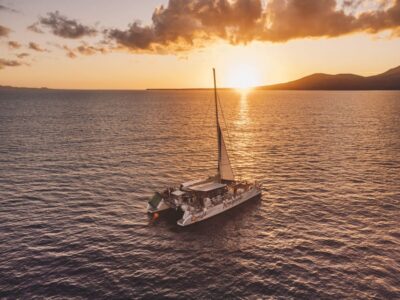

More Dives Around Lanzarote
Not quite right? More Lanzarote tours and day trips we have been out on
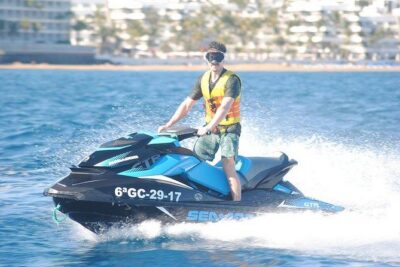
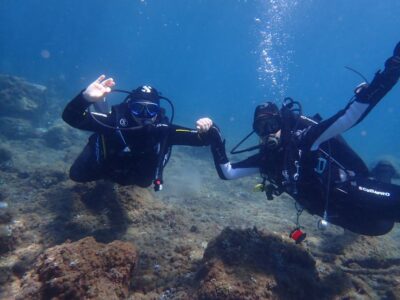

Scuba Diving & Museo Atlántico, compared.
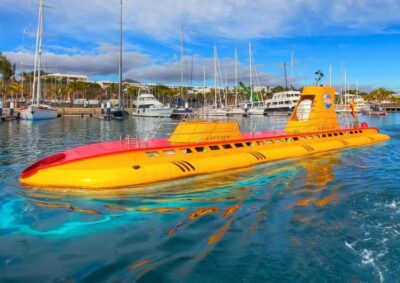 ★ 4.5Real Submarine Dive with Hotel PickupFrom $74771 reviews
 ★ 5.0Lanzarote Introductory Scuba Diving ExperienceFrom $81766 reviews
 ★ 4.5Submarine Safaris LanzaroteFrom $83469 reviews
 ★ 5.0Intro to Diving Experience for BeginnersFrom $87244 reviews
 ★ 5.0Try Scuba Diving with 2 Ocean DivesFrom $169242 reviews
 ★ 4.9Scuba Diving for Beginners – 1 DiveFrom $106141 reviews
 ★ 4.9Puerto Del Carmen: Try Scuba Diving with 2 Dives and PhotosFrom $153140 reviews
 ★ 5.0Scuba Diving in Lanzarote (for certified divers only)From $96133 reviews
Browse the lists this tour appears in